
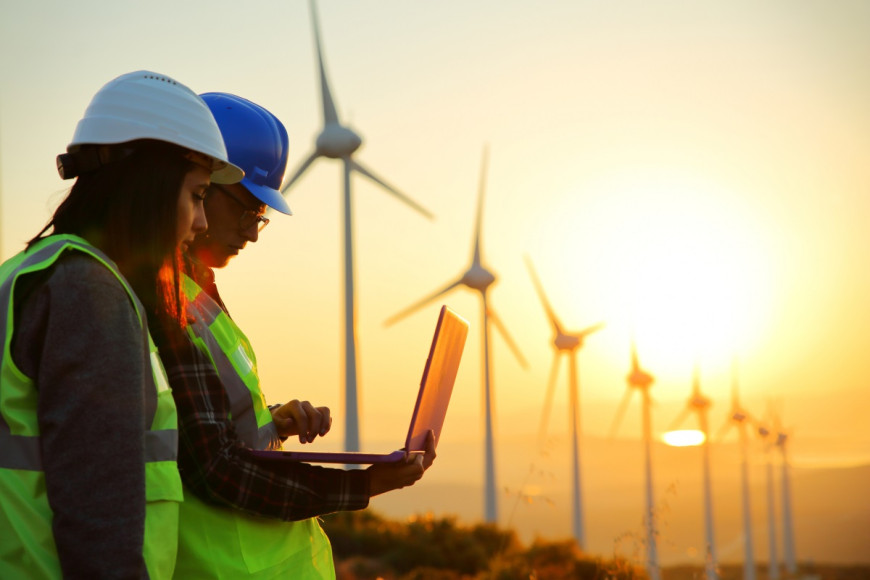
Climate change is no longer a distant concern; it is happening right now. The repercussions of climate change are becoming more obvious by the day, from rising global temperatures and unpredictable weather patterns to an increase in the frequency of catastrophic disasters. As the globe confronts these difficulties, engineering, particularly environmental engineering, is playing an increasingly important role in developing sustainable solutions. Students studying or contemplating a career in engineering at the top private college for engineering in Jaipur must understand how their area contributes to climate change mitigation and adaptation.
In this article, we will look at how environmental engineering handles climate change, what kind of technologies are developing, and how engineering students may prepare to be part of the answer.
What is Environmental Engineering?
Environmental engineering is a field that applies scientific and technical methods to enhance the natural environment. It focuses on providing clean water, managing waste, reducing pollution, and recovering ecosystems. Environmental engineers work at the interface of technology and sustainability, creating systems and infrastructure to assist lessen humanity’s influence on the planet.
Climate change has introduced a new layer of urgency and complexity to this industry, transforming environmental engineers into front-line protectors of our planet’s future.
The Role of Environmental Engineering in Combating Climate Change
1. Carbon Capture and Storage (CCS)
Greenhouse gas emissions, particularly carbon dioxide (CO₂) from industry and cars, are a major contributor to climate change. Environmental engineers are creating Carbon trap and Storage (CCS) devices to trap CO₂ emissions and store them underground in geological formations. This technology does more than merely lower emissions; it has the ability to reverse them.
Pilot operations in Canada and Norway have demonstrated that storing CO₂ in deep saline aquifers may be safe and effective. CCS innovations are making it more inexpensive and scalable, providing promise for large-scale decarbonization.
2. Waste Management and Methane Reduction
Improper waste management contributes significantly to climate change, particularly through methane emissions from landfills. Environmental engineers create contemporary waste treatment technologies, such as anaerobic digesters, which turn organic waste into biogas, a renewable source of energy.
They also aim to promote circular economies, in which waste is reduced and products are reused or repurposed. The premise is simple: convert garbage into treasure while lowering greenhouse gas emissions.
3. Water Resource Management
Climate change has resulted in more frequent droughts and floods, affecting water supply and quality. Environmental engineers provide sustainable water systems such as rainwater collection, desalination facilities, and wastewater recycling technology.
For example, in metropolitan settings, green infrastructure such as bioswales, green roofs, and permeable pavements aids in stormwater management and urban heat reduction, both of which are exacerbated by climate change.
4. Air Pollution Control
Cleaner air is important not just for our lungs, but also for the environment. Air pollutants such as black carbon (soot) and ground-level ozone also contribute to greenhouse gas emissions. Environmental engineers create methods for monitoring and reducing air pollution both indoors and outside.
Scrubbers for industrial chimneys, smart air quality sensors, and nanotechnology-based filters for automobiles and factories are all examples of innovations. These technologies are critical for improving urban air quality and diminishing the atmosphere’s ability to retain heat.
5. Sustainable Urban Development
Climate change affects both cities and their inhabitants. They use a lot of energy and emit a lot of pollutants. Environmental engineers play an important part in green building design by ensuring that structures are energy-efficient, well-ventilated, and emit minimal levels of pollutants.
These engineers help cities expand in a climate-resilient and ecologically aware way by improving ventilation systems, adding solar panels, and passive cooling techniques.
Real-World Examples of Environmental Engineering in Action
- Singapore’s NEWater Project: Singapore processes and recycles wastewater to produce high-quality drinking water. Environmental engineers developed this strategy, which has enabled the country attain water security despite restricted freshwater supplies.
- The Netherlands’ Flood Defense Systems: Rising sea levels pose a concern to the low-lying Netherlands. Engineers created moveable storm surge barriers and environmentally friendly dikes to defend the country from flooding while maintaining marine habitats.
- Delhi Metro’s Rainwater collecting: To tackle water scarcity and manage urban runoff, the Delhi Metro Rail Corporation has installed rainwater collecting systems across its stations, governed by environmental engineering principles.
Future Technologies in Environmental Engineering
Environmental engineers’ tools improve in tandem with the changing climatic issues. Some cutting-edge technologies are:
- Algae bioreactors can trap CO₂, create oxygen, and generate biofuel.
- Smart sensors and artificial intelligence: These technologies are used to monitor air and water quality in real time, allowing for faster and more informed decisions.
- Green hydrogen: Environmental experts are looking at ways to generate hydrogen from renewable energy, a critical fuel for a carbon-neutral future.
How Students Can Contribute
If you’re a student in an engineering college, you don’t need to wait until graduation to be part of the solution. Here’s how you can get involved:
- Choose environmental electives or minors: Learn about sustainability, water treatment, waste management, and renewable energy.
- Participate in green campus initiatives: Join or start student clubs that work on recycling, plantation drives, or clean energy projects.
- Take up climate-focused internships: Many NGOs, research labs, and even startups are working on innovative environmental solutions.
- Pursue research projects: Topics like carbon footprint analysis, renewable materials, or green infrastructure can become your thesis or final-year project.
- Stay updated: Follow climate journals, engineering forums, and global events like COP conferences to keep your knowledge current.
Concluding Thoughts
Environmental engineering is more than just a job; it is a commitment to saving the earth. As climate change increases, the demand for experienced environmental engineers will only increase. From trash to water, energy to air, this subject has significant chances for making a difference in the actual world.
Engineering institutions play a key role in training students for this obligation. With the proper information, skills, and mentality, today’s students from the best private college for engineering in Jaipur can become tomorrow’s climate heroes.
If you’re interested in science, problem solving, and making a difference, environmental engineering might be the perfect fit.