
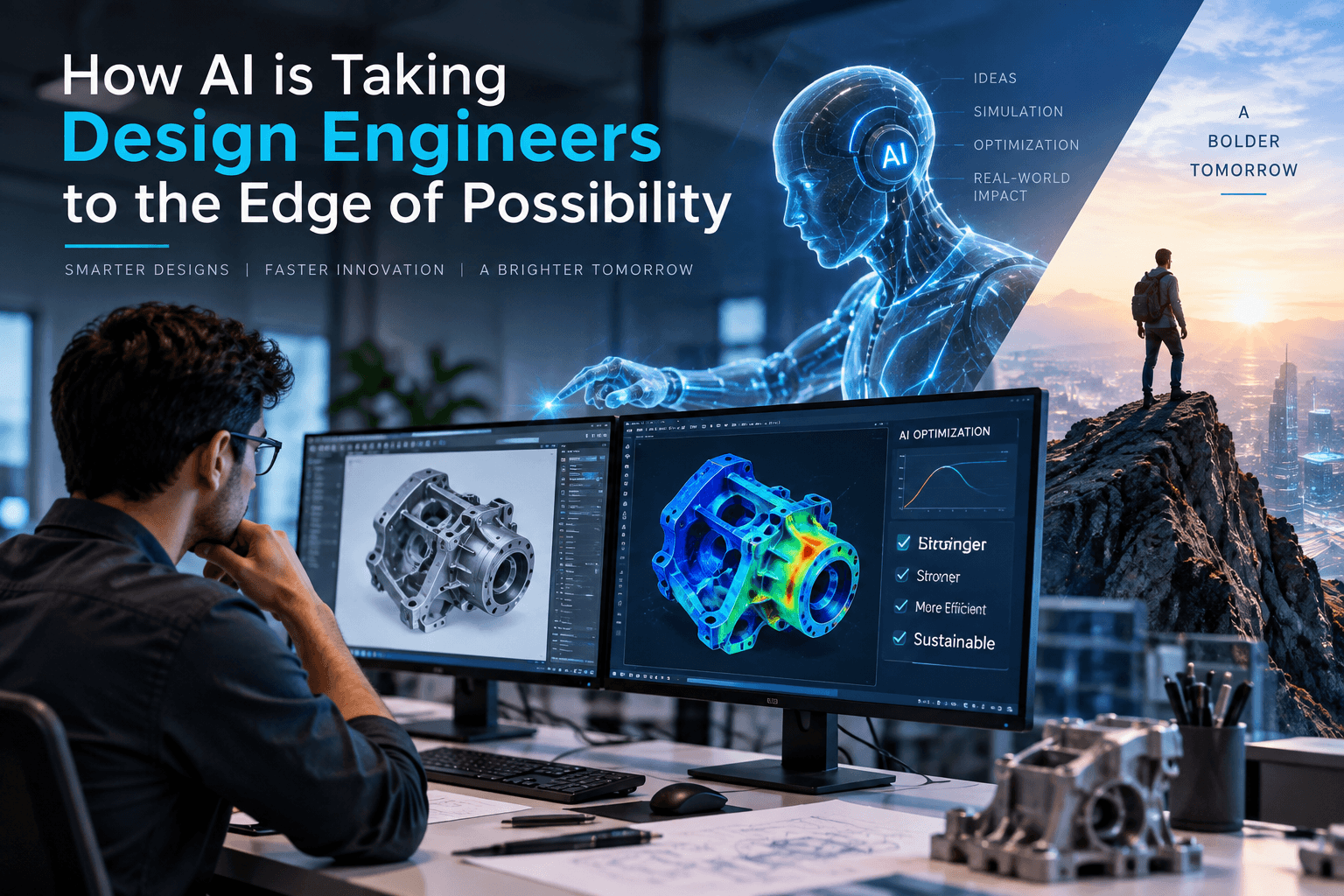
Artificial Intelligence (AI) is transforming industries across the globe, and design engineering is at the heart of this revolution. What once required weeks of calculations, multiple prototypes, and endless revisions can now be accomplished faster and more accurately with AI-powered tools. Rather than replacing engineers, AI is helping them think bigger, work smarter, and innovate faster.
From designing lightweight aircraft components to creating energy-efficient buildings and smarter consumer products, AI is enabling design engineers to solve complex problems like never before. As industries embrace Industry 4.0, engineers from the top private engineering college for Computer Science Engineering (Artificial Intelligence) in jaipur who understand AI will be better equipped to lead the next generation of innovation.
How AI is Changing the Design Process
The traditional design process involved creating a concept, building prototypes, testing them, identifying flaws, and repeating the cycle until the desired result was achieved. While CAD and simulation software improved efficiency, engineers still spent considerable time on repetitive tasks.
Today, AI accelerates every stage of product development. It can analyze large datasets, predict design performance, identify potential issues, and recommend improvements in minutes. This allows engineers to spend less time on routine work and more time solving creative and technical challenges.
Generative Design Unlocks New Possibilities
One of AI’s most exciting applications is generative design. Instead of manually creating multiple design options, engineers simply define objectives such as weight, material, strength, manufacturing method, and cost.
AI then generates hundreds of possible designs that meet these requirements. Many of these solutions are highly efficient, lightweight, and inspired by natural structures that humans may never have imagined. Industries such as aerospace, automotive, and healthcare are already using generative design to build stronger products while reducing material consumption and manufacturing costs.
Faster Testing with AI Simulations
Building physical prototypes can be expensive and time-consuming. AI-powered simulation tools allow engineers to test designs virtually before production begins.
These tools can predict how a product will perform under different conditions, including stress, heat, vibration, and impact. By identifying weaknesses early, engineers can refine their designs quickly, reduce development costs, and bring products to market faster without compromising quality.
Smarter Material Selection
Choosing the right material is one of the most important decisions in design engineering. AI helps simplify this process by analyzing thousands of material properties, including strength, durability, weight, cost, and environmental impact.
Based on the project’s requirements, AI recommends materials that provide the best balance between performance and sustainability. This helps companies reduce waste while designing products that are both reliable and environmentally responsible.
Improving Manufacturing Efficiency
A great design should also be easy to manufacture. AI helps engineers identify manufacturing challenges before production begins.
It can detect complex machining operations, unnecessary material usage, assembly difficulties, and areas where production costs can be reduced. By considering manufacturing constraints during the design stage, engineers can avoid costly modifications later and improve overall production efficiency.
AI Supports Engineers, It Doesn’t Replace Them
A common concern is whether AI will replace design engineers. The reality is quite the opposite.
AI excels at processing large amounts of data and automating repetitive tasks, but it cannot replace human creativity, engineering judgment, or critical thinking. Engineers are still responsible for understanding customer needs, making design decisions, ensuring safety, and solving real-world problems.
AI works as an intelligent assistant, giving engineers better insights so they can make smarter decisions with greater confidence.
Skills Future Design Engineers Need
As AI becomes an essential part of engineering, students must develop skills that combine traditional engineering knowledge with digital technologies.
Some important skills include CAD modelling, simulation software, data analysis, programming basics, AI-assisted design tools, and an understanding of machine learning concepts. Engineers who are comfortable using intelligent software will have a clear advantage in the future job market.
Continuous learning will also become increasingly important as AI technologies continue to evolve.
Preparing for the Future at Anand-ICE
Engineering education must keep pace with rapidly changing industry demands. Students need opportunities to work on practical projects, use modern engineering software, and understand emerging technologies such as AI and automation.
As one of the best private college for engineering in Jaipur, Anand-ICE focuses on experiential learning through advanced laboratories, project-based education, industry exposure, and innovation-driven activities. Students gain the technical knowledge and practical skills needed to succeed in AI-powered engineering environments.
Recognized as a top private engineering college in Jaipur, Anand-ICE prepares future engineers to think creatively, solve real-world challenges, and confidently contribute to the industries of tomorrow.
Conclusion
Artificial Intelligence is pushing design engineering to the edge of possibility. By automating repetitive tasks, generating innovative design alternatives, improving simulations, and optimizing manufacturing, AI allows engineers to develop better products in less time.
The future of design engineering belongs to professionals who combine technical expertise with intelligent technologies. Engineers who embrace AI will not only improve productivity but also unlock new levels of creativity and innovation.
As industries continue to evolve, the partnership between human ingenuity and artificial intelligence will shape the next generation of engineering breakthroughs, making this an exciting time for aspiring design engineers.