
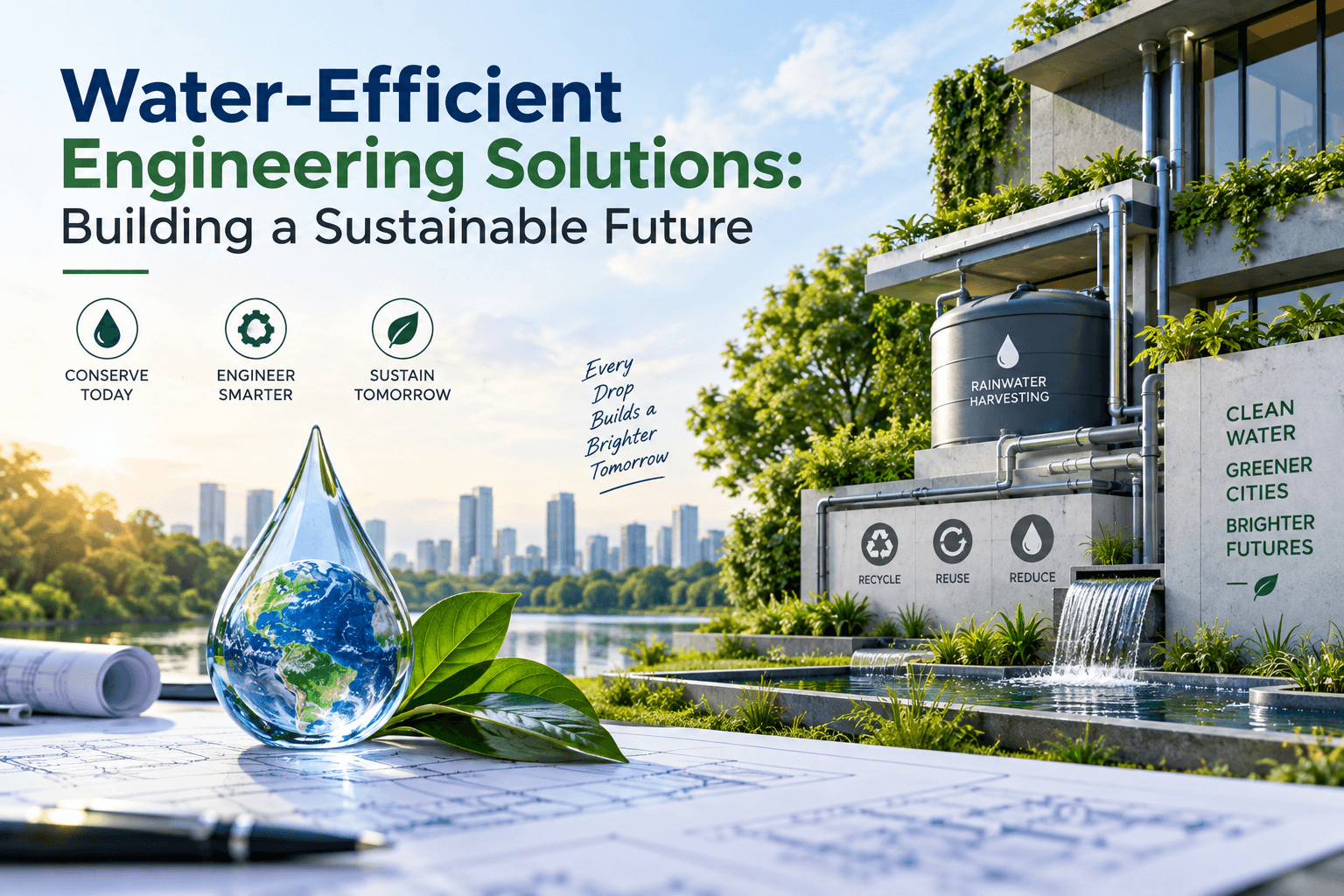
Water is one of the most valuable resources on the planet, yet increasing populations, rapid urbanisation, climate change and industrial growth are placing enormous pressure on freshwater supplies. According to the United Nations, water scarcity already affects billions of people worldwide, making responsible water management an urgent global priority.
Engineering students from the top private college for engineering in Jaipur has an important role to play in addressing this challenge. From smart irrigation systems and wastewater treatment to water-efficient buildings and industrial processes, engineers are developing technologies that reduce water consumption without compromising productivity or quality of life.
Why Water Efficiency Matters
Traditional water systems often lose significant amounts of water through leakage, inefficient equipment, evaporation and poor management. In agriculture, conventional irrigation can consume large quantities of freshwater, while industries may use water repeatedly without adequate recovery or recycling.
Water-efficient engineering focuses on using less water, recovering what has already been used and making every drop work harder. The objective is not simply conservation, but creating systems that are efficient, resilient and sustainable over the long term.
Smart Irrigation Systems
Agriculture is one of the largest consumers of freshwater, making irrigation a major area for engineering innovation.
Modern irrigation systems use technologies such as drip irrigation, soil-moisture sensors, automated valves and weather-based controllers. Instead of supplying water according to a fixed schedule, smart systems can determine when crops actually need water.
For example, soil sensors can monitor moisture levels and communicate with an automated irrigation system. If the soil already contains sufficient moisture, irrigation can be reduced or delayed. This prevents unnecessary water consumption while supporting healthier crop growth.
Engineers are also combining irrigation technology with IoT and data analytics to create systems that continuously monitor environmental conditions and optimise water usage.
Water-Efficient Buildings
Buildings consume water every day for drinking, sanitation, cleaning, landscaping and other activities. Engineering can significantly reduce this demand through efficient plumbing and building systems.
Low-flow taps, dual-flush toilets, water-efficient showers and sensor-operated fixtures can reduce unnecessary consumption. Engineers can also design buildings with rainwater harvesting systems that collect and store rainwater for applications such as gardening, flushing toilets and cleaning.
Greywater recycling is another promising solution. Water from sinks, showers and washing machines can be treated and reused for non-potable purposes. This reduces the demand placed on freshwater supplies and lowers the amount of wastewater entering treatment systems.
Industrial Water Recycling
Industries often require large volumes of water for cooling, manufacturing, cleaning and processing. Instead of treating used water as waste, modern engineering approaches focus on recovery and reuse.
Industrial water recycling systems can capture wastewater, remove contaminants and return treated water to the production process. Technologies such as membrane filtration, reverse osmosis and advanced biological treatment can make water suitable for reuse.
Closed-loop water systems take this concept even further. Water is continuously circulated within an industrial facility, with treatment processes maintaining the required quality. This can dramatically reduce freshwater consumption and wastewater discharge.
Smart Water Networks
Urban water infrastructure can lose significant quantities of water through leaking pipes and outdated systems. Engineers are addressing this problem by developing smart water networks equipped with sensors, meters and digital monitoring platforms.
These systems can monitor pressure, flow rates and consumption patterns in real time. An unusual change in water flow can indicate a potential leak, allowing maintenance teams to respond before large quantities of water are lost.
Artificial intelligence and data analytics can further improve these systems by identifying consumption patterns, predicting infrastructure failures and helping utilities manage demand more efficiently.
Desalination and Water Reuse
In regions facing severe freshwater shortages, engineers are exploring alternative sources of water. Desalination converts seawater into freshwater, while advanced wastewater treatment allows used water to be purified and reused.
Modern desalination plants increasingly rely on reverse osmosis technology. Although desalination requires significant energy, improvements in membrane technology, energy recovery systems and renewable energy integration are making the process more efficient.
Similarly, advanced wastewater treatment can produce high-quality reclaimed water for industrial, agricultural and, where appropriately treated and regulated, potable applications.
Sustainable Drainage Systems
Water efficiency is not only about reducing consumption. It also involves managing rainwater effectively.
Traditional urban surfaces such as concrete and asphalt prevent rainwater from naturally soaking into the ground. Sustainable drainage systems use permeable pavements, rain gardens, retention ponds and green infrastructure to capture and manage stormwater.
These systems can reduce flooding, support groundwater recharge and improve water quality by filtering pollutants before runoff reaches rivers and lakes.
The Role of Renewable Energy
Water and energy are closely connected. Many water treatment, pumping and desalination systems require considerable energy, which means improving energy efficiency can also make water systems more sustainable.
Engineers are increasingly integrating solar, wind and other renewable energy sources into water infrastructure. Solar-powered irrigation pumps, for example, can provide reliable water access in remote agricultural areas while reducing dependence on conventional fuels.
The combination of renewable energy, smart technology and efficient water systems can create solutions that are both environmentally responsible and economically practical.
What Engineers Can Do
Water-efficient engineering requires collaboration across multiple disciplines. Mechanical engineers can design efficient pumps, valves and treatment equipment. Civil engineers can develop sustainable drainage and water infrastructure. Electrical and electronics engineers can build sensors and automation systems, while computer engineers and data scientists can develop intelligent monitoring and prediction tools.
Engineering students can contribute by learning about sustainability alongside their core technical subjects. Projects involving rainwater harvesting, smart irrigation, IoT-based leak detection, wastewater recycling or water-quality monitoring can provide practical ways to explore these challenges.
Conclusion
Water scarcity is not a challenge that can be solved by conservation alone. It requires smarter infrastructure, innovative technology and engineering systems designed around efficiency from the beginning.
Water-efficient engineering solutions can help agriculture produce more with less water, industries recycle valuable resources and cities reduce leakage and unnecessary consumption. As technology continues to advance, engineers from the top private college for engineering in Jaipur will be at the forefront of creating water systems that are smarter, more efficient and more resilient.
The future of water management will not simply be about finding more water. It will be about engineering better ways to use the water we already have.